
Facial aging does not happen suddenly, nor is it caused by a single factor. It is a progressive process involving structural changes across multiple layers of the face — from the skin itself to the deeper tissues responsible for support, definition, and firmness. Biologically, this process includes collagen loss, weakening of facial structures, and changes in muscular dynamics over time.
As the years pass, the body naturally begins to produce less collagen, one of the key proteins responsible for skin firmness and structural support. In fact, multiple dermatological studies suggest that collagen production can decrease by approximately 1% to 1.5% per year after the age of 25. This gradual decline is one of the primary reasons behind skin laxity, facial volume loss, reduced definition, and the appearance of expression lines.
For this reason, when patients come to Cliniq for aesthetic medicine consultations, many describe their concern in a very similar way:
“It’s not just one wrinkle… it’s everything.”
Because facial aging does not occur in a single dimension. It affects multiple structural levels of the face simultaneously. And when the aging process develops on multiple levels, treatment must do the same.
At Cliniq, this scientific principle led to the creation of TRÍA 360 — a premium aesthetic medicine protocol that combines three advanced medical technologies to address facial aging from its structural origin.
So if time gradually reduces support, slows collagen production, and weakens skin firmness, TRÍA 360 is designed to work in the opposite direction.
Combines:
How does the face change with aging over time?
Many people begin to notice subtle changes in their face long before fully understanding why they happen: less firmness, softer facial contours, or wrinkles that were not there before. And in many cases, they assume it is only a skin issue.
However, these changes do not happen only at the surface level. In reality, what we see in the mirror is the result of multiple biological processes occurring simultaneously across different layers of the face.
Loss of deep structural support
Beneath the skin lies a structure known as the SMAS — a connective tissue network that links the facial muscles to the skin and helps maintain the natural position and support of the face.
Over time, this structure gradually loses tension and support. As a result, the jawline becomes less defined and certain areas of the face may begin to descend subtly.
The American Society of Plastic Surgeons describes facial aging as a progressive reorganization of the deep facial tissues, rather than simply “sagging skin.”
The skin produces less collagen over time
Collagen is one of the most important proteins responsible for maintaining skin firmness and elasticity.
After the age of 25, the body naturally begins to produce less collagen each year. This explains why the skin changes not only in appearance, but also in its internal structure. It may feel less firm, lose elasticity, or begin developing fine lines that were not previously visible.
Facial expressions begin to leave lasting marks
The human face contains more than 40 muscles constantly involved in facial expression and movement.
Over time, the repetitive motion of these muscles can create what are known as dynamic lines — wrinkles that appear while smiling, frowning, or expressing emotion. Eventually, these lines may remain visible even when the face is at rest.
Understanding that facial aging develops across multiple structural layers changes the way it should be treated.
That is why Cliniq developed TRÍA 360 — a premium aesthetic medicine protocol that combines advanced technologies designed to act at different levels of the face, stimulating natural collagen production in deeper structures while softening visible signs of aging on the surface of the skin.
Benefits of combining technologies in TRÍA 360
TRÍA 360 is an advanced aesthetic medicine protocol that integrates three internationally recognized medical technologies:
Each one works at different layers of the face, targeting distinct biological mechanisms involved in facial aging. When strategically combined, they make it possible to address three key factors of facial aging: structure, support, and expression.
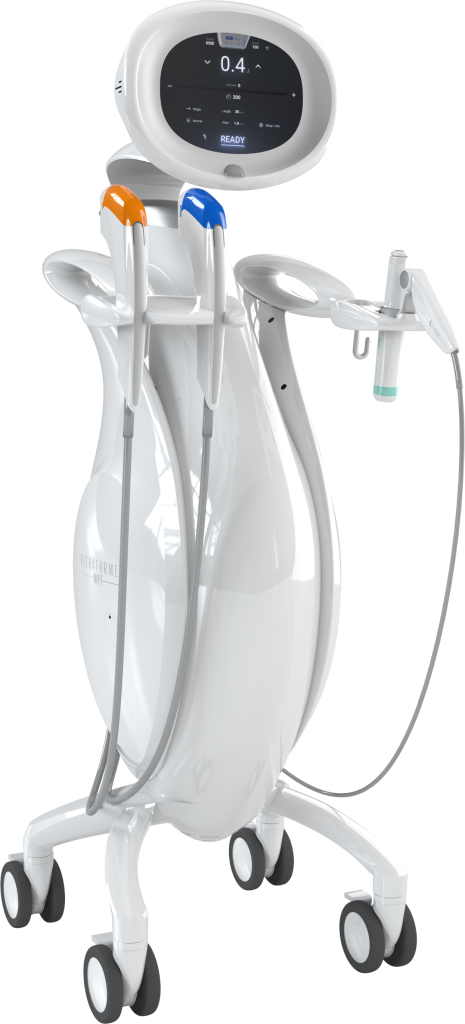
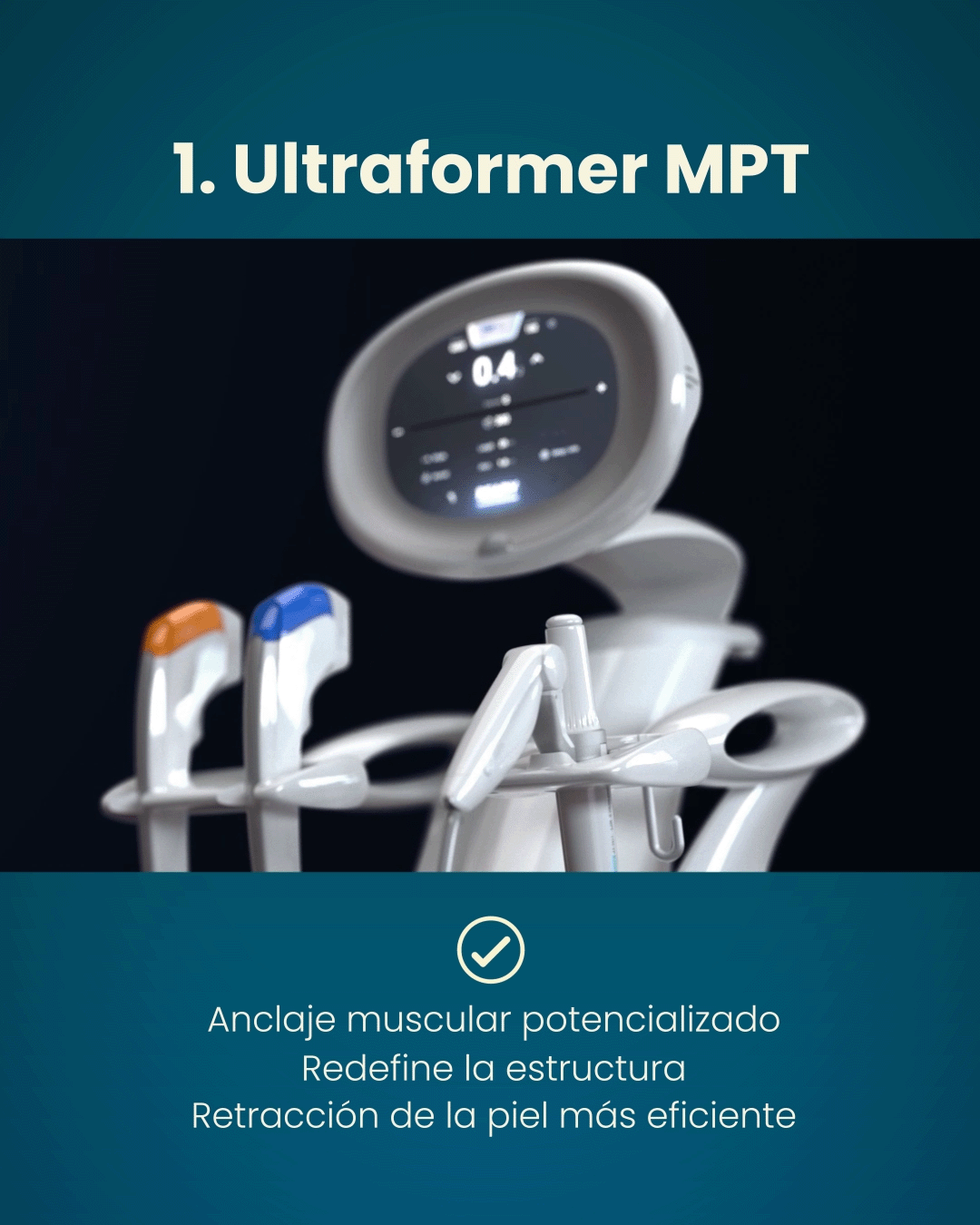
Ultraformer MPT: deep stimulation of facial support structures
Classys is a global leader in medical aesthetic technologies, distributing advanced devices in more than 70 countries. Among its innovations is Ultraformer MPT, a technology based on micro and macrofocused ultrasound (MFU).
This type of energy makes it possible to target the deeper layers of the skin, including the SMAS (Superficial Musculoaponeurotic System) — the same anatomical structure addressed during a surgical facelift.
By stimulating these deeper layers, the treatment triggers a biological process known as neocollagenesis, the natural activation of skin fibroblasts to produce new collagen and elastin fibers. This process is part of the body’s own repair mechanisms and gradually helps improve tissue firmness and structural support.
Progressive results may include:
- Redefinition of the facial contour
- Improved jawline projection
- Greater firmness in areas where the skin begins to sag
Unlike superficial treatments, this type of stimulation acts at the structural foundation that supports the face.

HarmonyCa: immediate support and collagen biostimulation
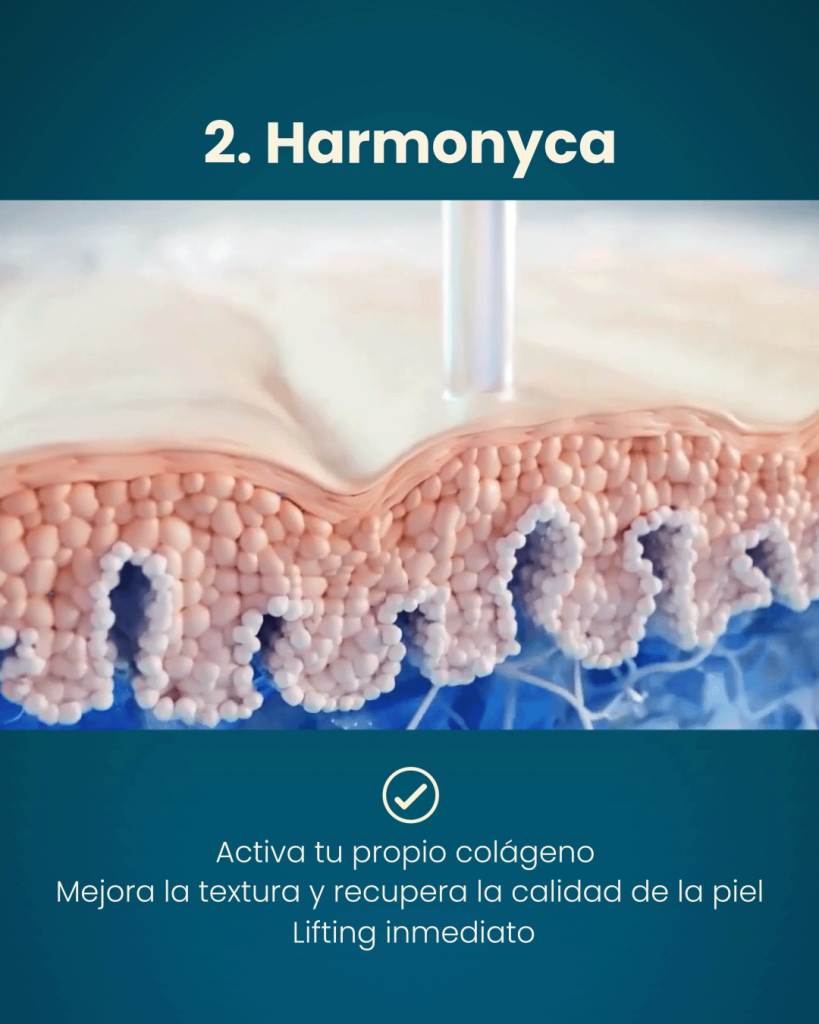
Developed by Allergan Aesthetics, HarmonyCa is a hybrid biostimulator that combines two complementary components:
- Hyaluronic acid, which provides immediate structural support
- Calcium hydroxyapatite, which stimulates collagen production
Calcium hydroxyapatite acts as a matrix that stimulates fibroblasts to produce new collagen fibers, gradually helping improve skin firmness and overall skin quality over time.
For this reason, biostimulation has become one of the foundations of modern aesthetic medicine, as it focuses on activating the body’s own regenerative mechanisms rather than simply adding volume alone.
Botox: softening facial expression lines
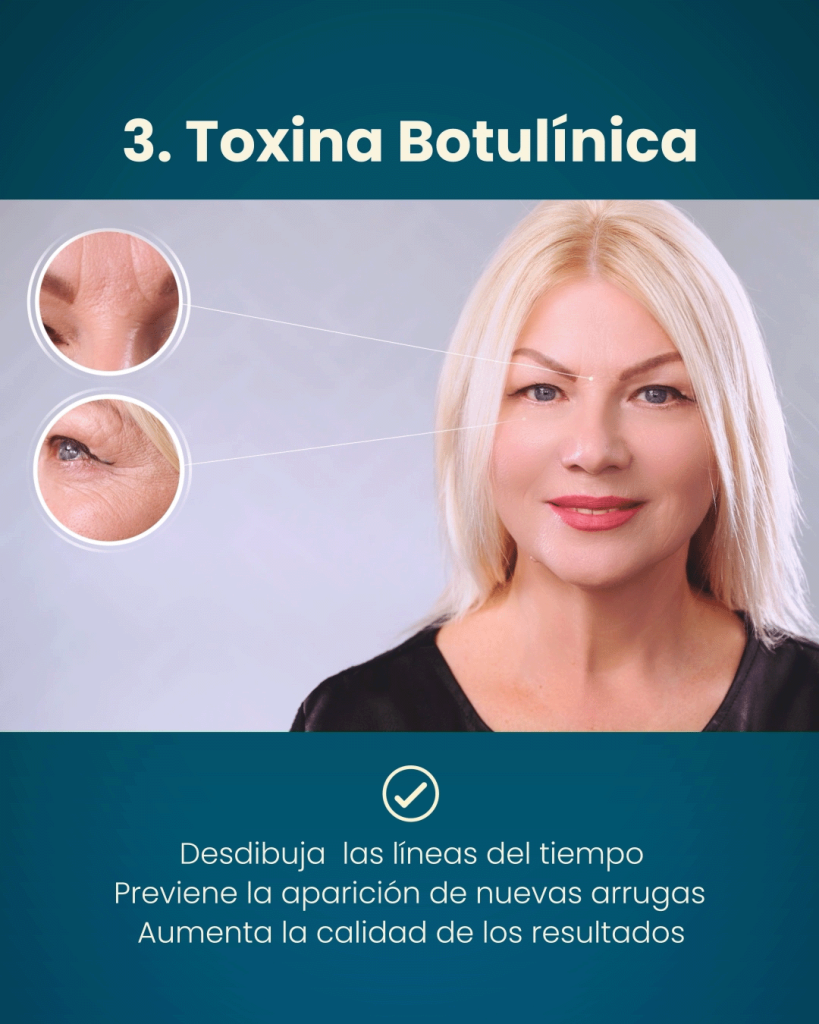
Botulinum toxin, marketed by Allergan Aesthetics under the brand name Botox, is one of the most widely studied and commonly performed treatments in aesthetic medicine.
Its primary function is to temporarily relax the activity of specific facial muscles responsible for dynamic expression lines, particularly in areas such as:
- Forehead
- Frown lines
- Crow’s feet
By reducing repetitive muscle contractions, the skin can gradually appear smoother while restoring a more rested and refreshed appearance.

In TRÍA 360, Botox helps balance facial expression and smooth the skin’s surface, while Ultraformer MPT and HarmonyCa work within the deeper layers of the face, strengthening structural support and stimulating natural collagen production.
¿At what stages of facial aging does each technology work?
1. Botox softens facial expression lines at the surface level
Botox is administered through precise microinjections into specific facial expression muscles, such as the frontalis, corrugator, and orbicularis oculi muscles.
This allows the skin covering those muscles — primarily within the superficial dermis — to stop folding repeatedly, progressively softening expression lines over time. Its effects typically begin to appear within 3 to 7 days.
2. HarmonyCa provides immediate support while stimulating collagen production
HarmonyCa is strategically injected into the deep dermis and subdermal layers, where it can help reinforce the skin’s structural support system.
Its hybrid composition combines immediate structural support with progressive collagen biostimulation, helping improve skin firmness and overall skin quality over time.
3. Ultraformer MPT uses micro and macrofocused ultrasound technology
Ultraformer MPT delivers thermal energy to highly precise points within the tissue using micro and macrofocused ultrasound technology.
This allows the treatment to target multiple depths, including the deep dermis and the Superficial Musculoaponeurotic System (SMAS).
The controlled heating of these layers creates microthermal coagulation zones that activate the body’s natural tissue repair processes. As a biological response, the skin initiates neocollagenesis and collagen remodeling, progressively improving skin firmness, support, and tension over time.
The medical approach behind TRÍA 360 at Cliniq
At Cliniq, TRÍA 360 is not performed as a standardized facial aging protocol.
Every treatment begins with a personalized medical assessment, where factors such as the following are carefully evaluated:
- Facial anatomy
- Skin quality
- Degree of skin laxity
- Facial muscle dynamics
- The patient’s aesthetic goals
Only after this analysis is completed can the medical team determine whether this protocol is the right approach for the patient.
Because in advanced aesthetic medicine, the goal is not to transform a face. It is to restore the harmony that time gradually begins to change.
At Cliniq, TRÍA 360 is not applied as a one-size-fits-all treatment. Schedule your consultation and discover whether TRÍA 360 is the ideal facial rejuvenation treatment for you.